
Checking for a Warrant in West Union
A West Union warrant search starts at the Fayette County Sheriff's Current Active Warrants page. The sheriff describes entries there as possibly active, so treat a name match as a lead rather than final word. The form takes a name, plus an optional charge phrase and issue-date limits. Run the full legal name first. Then, if you entered dates, run the search again without them, since a tight or wrong date range can bury an older record. The city of West Union itself posts no online warrant database, so a thorough self-check leans on more than one source. Work the steps yourself rather than sending someone to confront a person who appears in the results.
- Search the sheriff page by full name and leave the date fields blank on the first pass.
- Review Iowa Courts Online for a public Fayette County case or docket event.
- Call the Fayette County Clerk of Court at 563-422-5694 about a filed case or missed setting.
- Call the sheriff at 563-422-6067 to confirm whether a law-enforcement warrant remains active.
- For a sheriff record not online, mail a specific request to the Records Department, PO Box 518, West Union, IA 52175.
The IOWA System is restricted, not a public fallback. It links authorized criminal-justice agencies, so a West Union resident must rely on the public sheriff, court, clerk, and records channels instead.
West Union Police Warrant Duties
Chapter 30 of the West Union Code creates the city police department and hands its chief a local enforcement role over laws and ordinances. Among the listed duties are bringing people accused of offenses before the proper court and executing and returning writs and process. That places West Union police squarely inside warrant service, though it never makes the department the court that issues one. An officer may investigate an alleged offense, ask a judge for process, make an arrest, or carry out a writ. The judicial call itself belongs to a magistrate or another Iowa District Court judicial officer. The Fayette County Clerk of Court keeps the public district-court file after that. City police can field a local law-enforcement question, but the clerk and the sheriff remain the stronger confirmation paths for a case and a warrant's current status. Note: West Union police enforce and serve process, but they run no separate public warrant court or online list.
West Union Police and Municipal Court
West Union has a police department but no separate municipal criminal court of its own. Iowa's unified trial-court reform swept away the old mayor, police, municipal, and justice-of-the-peace courts. City municipal infractions now get filed with the Iowa District Court clerk and heard by an Iowa judicial officer. So phrases like "West Union municipal court warrant" mislead when they suggest a second court portal exists.
West Union City Contact
Use the city contact for a city-service, ordinance, or parking question. Iowa's official city listing gives 563-422-3908.
Fayette County Clerk of Court
Suite 200, 114 N Vine Street, West Union. Call 563-422-5694 for a public district-court case, docket, payment, or setting.
A city parking ticket travels the city-clerk route and never appears in Iowa Courts Online. A municipal-infraction citation, though, is filed in District Court under Iowa Code section 364.22. The type of paper decides the route. Where it started inside West Union does not.
West Union Warrant Geography
West Union counted 2,490 residents in the 2020 Census, making it the second-largest Fayette County city, and it serves as the county seat. That civic role brings a rare local perk: both main warrant-confirmation buildings sit in town. The courthouse and Clerk of Court stand at 114 N Vine Street. The sheriff and correctional center sit at 220 N Industrial Parkway. They sit close together on the map, yet each office does a different legal job.
The clerk manages the court file, the docket, fine or debt questions, and bond certificates during its posted office process. The sheriff, meanwhile, confirms law-enforcement status and handles jail or bond logistics. Sharing a city does not make these West Union offices interchangeable. Call the right one before you travel.
West Union Warrant Types
West Union warrant records come out of the unified Iowa District Court system. Iowa sources speak of arrest warrants, bench warrants, and failure-to-appear warrants. They do not use the Texas phrase "capias pro fine" as the local label. A search warrant is a different animal. It authorizes a search, not the arrest-status check most residents actually want.
| Warrant Type | How It Arises | Judicial Source |
|---|---|---|
| Arrest warrant | A complaint and affidavits support probable cause for an offense. | An Iowa magistrate or other authorized District Court judge |
| Bench or FTA warrant | A required hearing, sentencing, or other court duty is missed. | The judicial officer handling the Fayette County case |
| Municipal-infraction process | A city citation is filed as a civil municipal infraction. | Iowa District Court, not a West Union municipal court |
| Search warrant | Police seek authority to search a named place, person, or property. | An authorized Iowa judicial officer |
A probation or sentencing matter can also generate arrest process, sometimes with a no-bond hold attached. The current court order controls. The public list alone cannot establish which resolution option a West Union case allows.
West Union Courthouse Warrant History
West Union's court geography has deep roots. The Iowa Judicial Branch courthouse history records that West Union won the county seat despite pushback from the county's south. An early brick courthouse burned in 1872 after a prisoner escape. The 1874 replacement burned in 1922. The gray Bedford-stone courthouse with its bronze main entrance went up in 1923 and still stands.

That building history helps explain why a modern West Union warrant question so often ends on North Vine Street. It does not mean a person should simply show up. Clerk hours differ from general courthouse hours, and a live warrant may call for sheriff or attorney coordination first.
Inside a West Union Warrant Record
The sheriff's result view keeps things compact. You get name, date issued, charge, and bond amount. A detail template may also label warrant number, warrant type, and age. West Union searchers will find no published numbering pattern here, so invented examples are unsafe. A genuine number from your own paperwork can be treated as the warrant number shown by the court.
| Warrant number | Agency or court identifier, with no official West Union format published. |
|---|---|
| Name | The listed subject; confirm identity rather than relying on a same-name match. |
| Date issued | The date shown for issuance, which is useful but does not prove current status. |
| Charge or type | The alleged offense, FTA, probation, or other court-process label. |
| Bond amount | A displayed sum or no-bond notation that must be verified with the jail. |
| Court case | The related public docket may show hearings, filings, and disposition details. |
Some fields never appear. The West Union result leaves out date of birth, address, issuing judge, serving agency, and full status history. Juvenile, sealed, and confidential material can also stay out of public view.
West Union Warrant List Limits
The sheriff describes its entries as “possibly active warrants held by law enforcement agencies in Fayette County.” No completeness promise, total, or update schedule is posted. So treat a name as a lead, not a verdict. A blank result does not clear anyone either. A newly issued, sealed, confidential, or other-agency warrant may simply not appear in a West Union warrant search.
Confirm before acting. Call the sheriff and the Clerk of Court. Do not try to detain, approach, or confront a person shown in a public result.
Use the West Union list to find the right official channel. Let the court and law-enforcement record settle the status question. That due-process line matters most when a family member is helping with the search.
How West Union Warrants Fit the County System
A West Union police matter can move from investigation or citation to judicial review in Iowa District Court. The clerk keeps the public case file. An authorized peace officer may execute the warrant. The Fayette County sheriff supplies the public list. It also runs the county jail channel. Authorized agencies use the restricted state IOWA System as well, which stays closed to public search.
Warrant flow: West Union Police › Iowa District Court › Fayette County Sheriff › restricted IOWA System
For a city resident, this county-level handoff is the one to keep in view. Keep the West Union check focused on the city side. That means the city's police role, the in-town clerk, and the in-town sheriff. The broader Fayette County warrant records route covers the rest of the county system.
West Union Warrant Bond Check
A bond figure may be stale. It can also omit the type of bond a court requires. Call the sheriff at 563-422-6067, extension 245, before going to either West Union building. Confirm the current amount and type. Ask whether a judge must first review a no-bond hold, and whether the person is already in custody. During regular business hours, the Fayette jail instructions send a cash-bond payer to the Clerk of Court. The clerk issues a bond certificate, which you then take to the jail. After hours, the published route is to bring the correct cash amount to the sheriff's office. Checks are not accepted for bond. That rule comes from Iowa Judicial Branch guidance. A surety bond goes through a separate bonding business only if the court permits it. Bond is not a fine. Paying court debt does not by itself recall a warrant. Keep each receipt, order, and certificate, because the issuing judge controls any recall or change to court process.
West Union Warrant Records and Public Access
Public access to West Union warrant records runs through open court and sheriff channels, subject to limits. The sheriff accepts specific mailed records requests. It may charge reasonable costs. Some law-enforcement records stay confidential, and public court tools do not disclose sealed or protected juvenile material.
Key rules:
Iowa Open Records Act, chapter 22 supports access to open government records while preserving statutory exceptions.
Iowa Code section 804.1 requires probable cause for an arrest warrant and addresses willful failure to appear after citation.
Iowa Code chapter 232 keeps covered juvenile court records confidential unless law or a court order allows access.
Name the record with care in a West Union request. Include a phone number or valid email. Costs may be due at pickup or prepaid for mail delivery, and the sheriff may need time to review whether the requested item can lawfully be copied.
West Union Warrant Contact Choices
The official West Union departments page lists the city's departments and contacts. It covers the city side of a question.
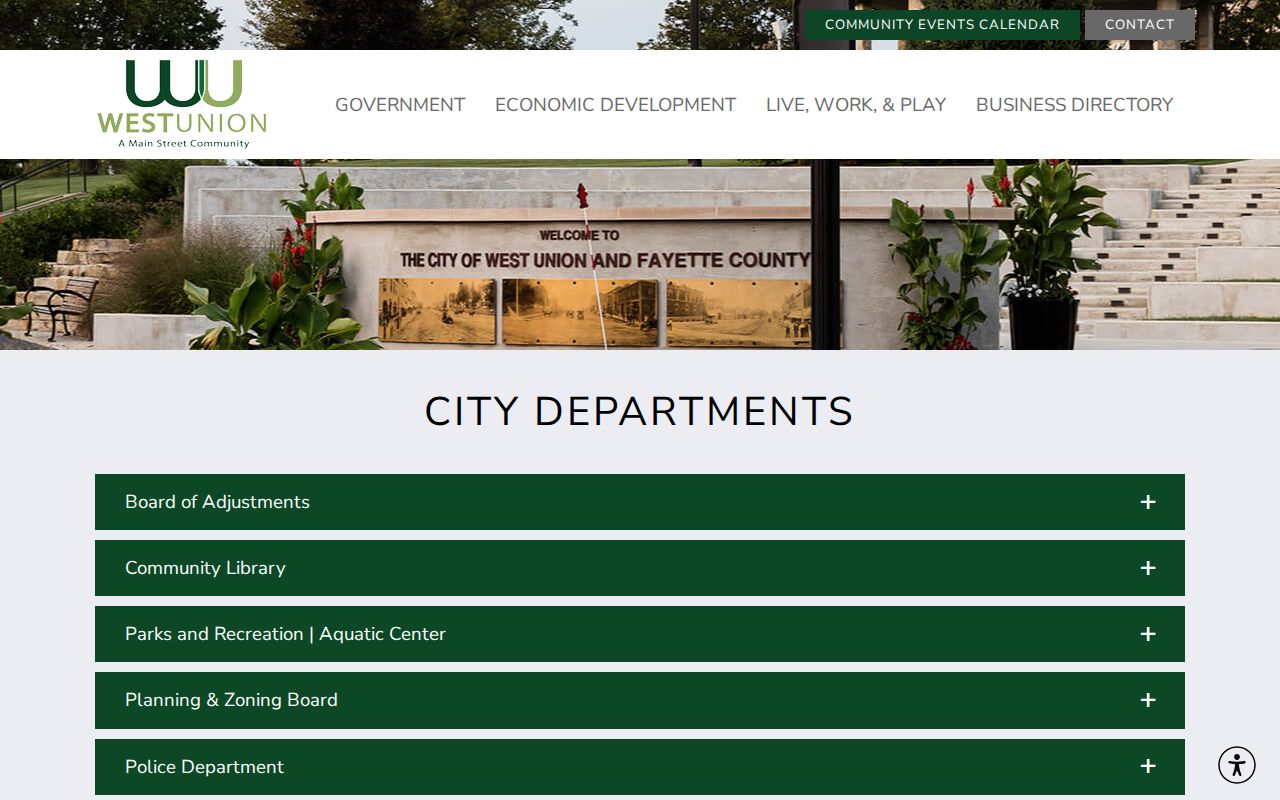
The city contact helps with parking and local services. It cannot replace the court or the sheriff for warrant matters. A missed District Court date belongs with the clerk. A current arrest-warrant question belongs with the sheriff. A city parking item belongs with city administration. If a sheriff record is missing online, the Records Department accepts a focused mailed request at PO Box 518. Skip the bulk-roster ask. State what record you need for your own case or a relative's process, and give the records clerk enough contact information to respond.