
Fayette County Arrest Warrants Explained
Iowa Code section 804.1 and Rules of Criminal Procedure 2.54 through 2.57 set the path a Fayette County warrant follows. Everything begins with a sworn complaint filed before a magistrate. That paper names the accused if known, lists the alleged offense and its statute, and gives a short account of the acts. Supporting affidavits can pile on more sworn facts. The magistrate then weighs whether the whole package shows probable cause: facts that would reasonably support believing an offense happened and that this particular person committed it. If the answer is yes, the magistrate issues a warrant commanding a peace officer to arrest the person and bring them before the court.
Probable Cause in Fayette County
Probable cause is what separates a real warrant from an untested request. No Fayette County law-enforcement agency can issue its own court warrant. An officer or prosecutor submits the sworn complaint, and only a magistrate performs the judicial review. Once signed, the warrant carries the court's authority.
Four terms do most of the work in a Fayette County warrant review. Complaint: the sworn charging paper that opens the proceeding. Affidavit: a sworn statement of facts supporting review. Probable cause: a reasonable factual basis for the accusation. Execution: an officer carrying out the arrest command.
The public sheriff row has limits. It does not display the underlying affidavit or the issuing judge. For more case detail in Fayette County, try public docket access or the Fayette clerk, unless the record is sealed or confidential.
Inside a Fayette County Arrest Warrant
Iowa Rule 2.36 forms give the reliable template. A warrant identifies the state and county, the criminal case number, the defendant, the offense and its statute, the arrest command, the date, and a judge or clerk signature. A bail endorsement may appear where applicable. Fayette County publishes no local number pattern, so treat any year prefix or court code with suspicion.
| Warrant Number | Use the actual case or warrant number; no local format is published. |
|---|---|
| Named Subject | The person whom the order identifies. |
| Charge / Offense | Offense name and statutory provision. |
| Issuing Judge / Court | Iowa District Court judicial authority and signature. |
| Bond / Bail Set | An endorsement may state terms; verify current status. |
| Date Issued | The warrant or signature date. |
Rule 2.36 Fields Matter
The official form answers one question: what a valid Iowa arrest command contains. The sheriff list answers another: what the public can search. They are not the same record. The public list shows a name, issue date, charge, and bond amount, with detail labels for warrant number, type, amount, and age. It leaves out the judge, the serving agency, the address, and the full return history. For the public case docket, use Iowa Courts Online; for case-specific confirmation, go to the Fayette County Clerk of Court. A completed warrant or affidavit may still be sealed or withheld by order. The form schema can explain a document, but it cannot prove that a particular Fayette County warrant is public or active.
Serving Arrest Warrants in Fayette County
The Fayette County Sheriff maintains the jail and the public active-warrant page. Oelwein, West Union, Fayette, and other city police may act within their authority. The Iowa State Patrol may execute state process. Behind the scenes, the agency-only IOWA System helps law enforcement coordinate, but it offers no public self-service warrant check. After an arrest, the officer brings the person before a magistrate. Iowa Rule 2.58 generally requires this within 24 hours when a magistrate is available, and within 48 hours in all events. At that initial appearance, the court covers rights, counsel, bond or release, and the next court step. The Fayette Correctional Center can hold up to 44 prisoners, a facility figure that says nothing about anyone's warrant.
Fayette's 24-and-48-Hour Rule
The clock starts at arrest, not when the warrant was issued or first posted online. Within 24 hours is the general rule unless no magistrate is available. Forty-eight hours is the outside limit in the rule. Those periods protect access to judicial review, not guaranteed release. At the appearance, the court advises rights, addresses counsel, and considers bond or conditions. A no-bond hold or a statutory category may require a judicial decision first. For verified custody and bond logistics only, call the jail at (563) 422-6067, extension 245. The Fayette County clerk and court handle the case itself.
Fayette Bond Schedule Limits
The Iowa Uniform Bond Schedule applies when someone is arrested for a non-forcible offense and court is not in session. That official schedule sets $25,000 for a class B felony, $10,000 for class C, $5,000 for class D, $2,000 for an aggravated misdemeanor, $1,000 for a serious misdemeanor, and $300 for a simple misdemeanor. Traffic and scheduled violations follow the Iowa compendium instead.
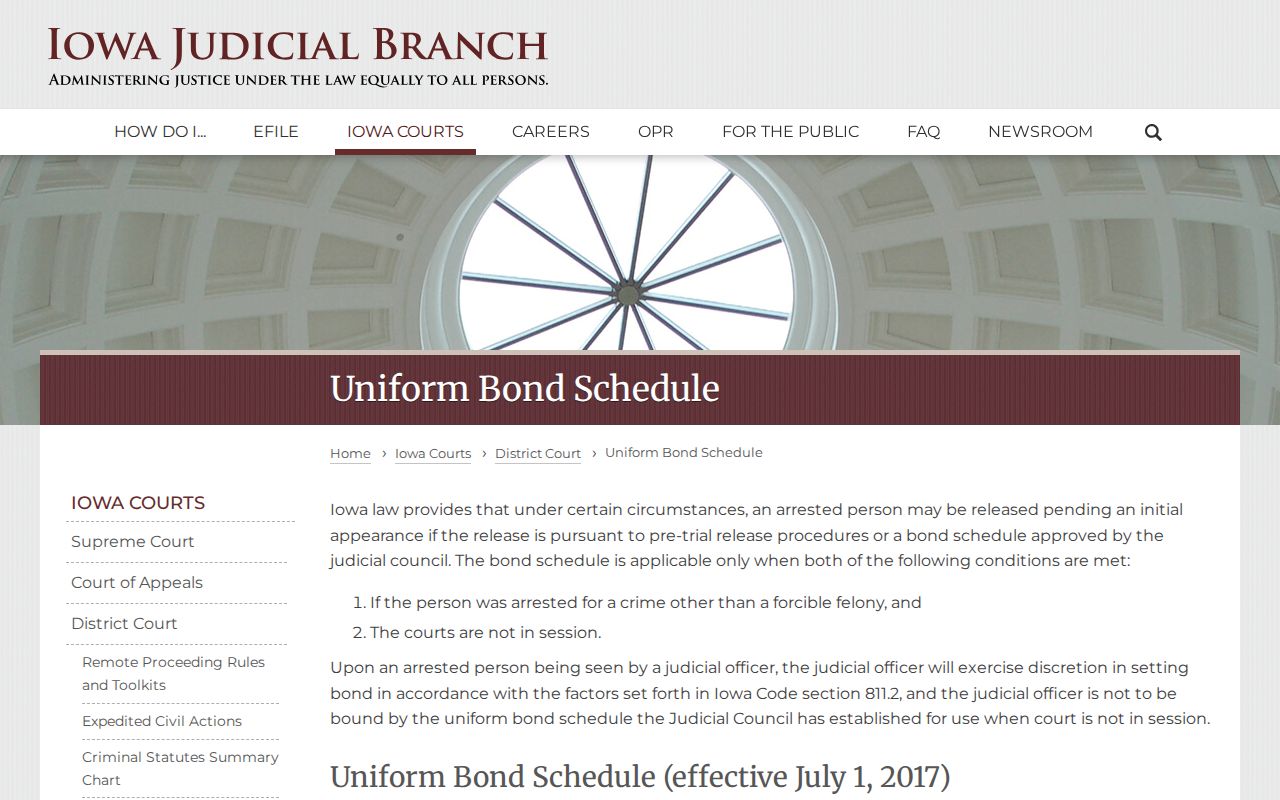
The schedule is not a promise. Forcible felonies and listed statutory categories require judicial review in Fayette County, and a judicial officer may use discretion after examining the person.
Comparing Arrest, Summons, and Bench Warrants
An arrest warrant commands custody after probable-cause review. A summons just orders the person to appear, with no immediate arrest. A bench warrant typically follows a missed appearance or a failure to comply in an existing Fayette County matter. The right response depends on the instrument, so confirm the document rather than trusting a broad label.
| Feature | Arrest Warrant | Summons | Bench Warrant |
|---|---|---|---|
| What It Orders | Arrest | Appearance | Arrest for missed duty |
| Basis | Probable cause | Notice to appear | Failure to appear or comply |
| Who Issues It | Magistrate | Court as authorized | Judicial officer in the case |
| How to Respond | Counsel, surrender, bond, court | Appear as directed | Recall, quash, appearance, or service |
Sealed Fayette Warrants Stay Hidden
Myth: every arrest warrant must appear on the sheriff page. Fact: a warrant or related application can be sealed. Juvenile records and other confidential material are also restricted. A new record may not yet have reached the public list, and another agency may hold it.
A blank result proves little. Sealed cases and federal matters never show up there, so a clean search is not the final word. Check the official sheriff list, search Iowa Courts Online, then call the Fayette County sheriff and clerk. A lawyer helps when a sealed or federal warrant seems likely. Federal cases run through a separate court and marshal system, not county channels.
If There's an Arrest Warrant for You
Start with phone calls. Ring the Fayette County sheriff at (563) 422-6067 and the Fayette County Clerk of Court at (563) 422-5694. Ask about current status, the issuing court, the case number, the bond type, and where the court wants the person to report. A lawyer can weigh a motion, a set appearance, or a planned surrender. Fayette County publishes no official walk-through policy, so confirm everything by phone first. If surrender and booking are required, verify the bond amount at extension 245. During regular hours, the published cash route runs through the clerk, which issues a certificate delivered to the jail. After hours, the sheriff tells the payer to bring the correct cash straight to the sheriff's office. Remember that bond only covers release and future court dates; it does not resolve the underlying charge.
Important: Talk to a lawyer before surrender. An active arrest warrant may be served during any lawful police contact.
Confirm Fayette Arrest Warrant Closure
Get everything on paper. That means the court order, bond certificate, receipt, release paper, or any other written proof. Ask the court when it will record service, a recall, or another outcome. Then recheck Iowa Courts Online after the stated processing time and call the Fayette County sheriff to make sure the law-enforcement record matches. A warrant vanishing from a list does not erase the charge. The case may still need hearings, a lawyer, payment, probation compliance, or another court order. If the sheriff entry lingers after the court acts, use the records channel and hand over the court documentation. One more caution: no legitimate office demands gift cards, cryptocurrency, wire transfers, or payment through an unverified link.
Federal Warrants Use Another Court
The Northern District of Iowa court page identifies the federal court serving this region.
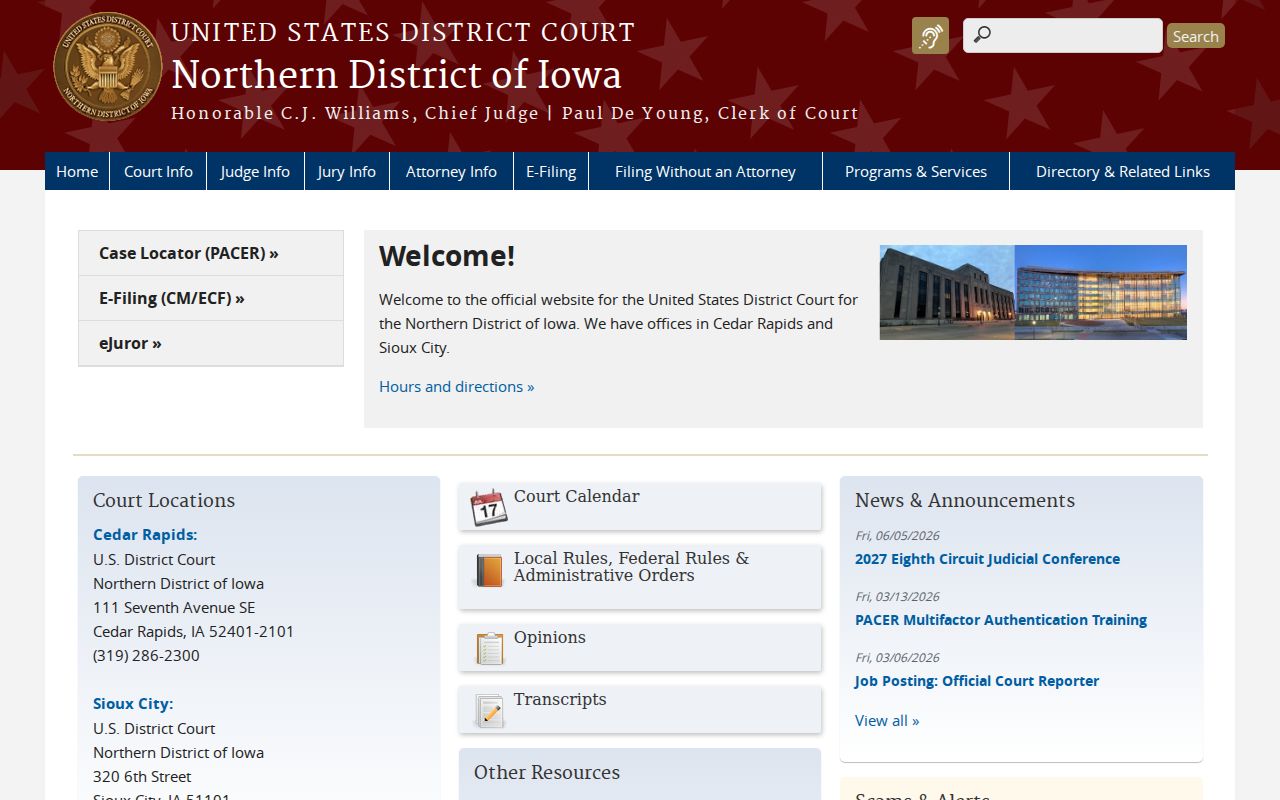
A federal arrest warrant is not a Fayette County District Court record, and it may stay sealed. The county's public tools cannot give final confirmation either way. The official PACER pricing page lays out the federal docket system's current access fees and its waiver threshold.
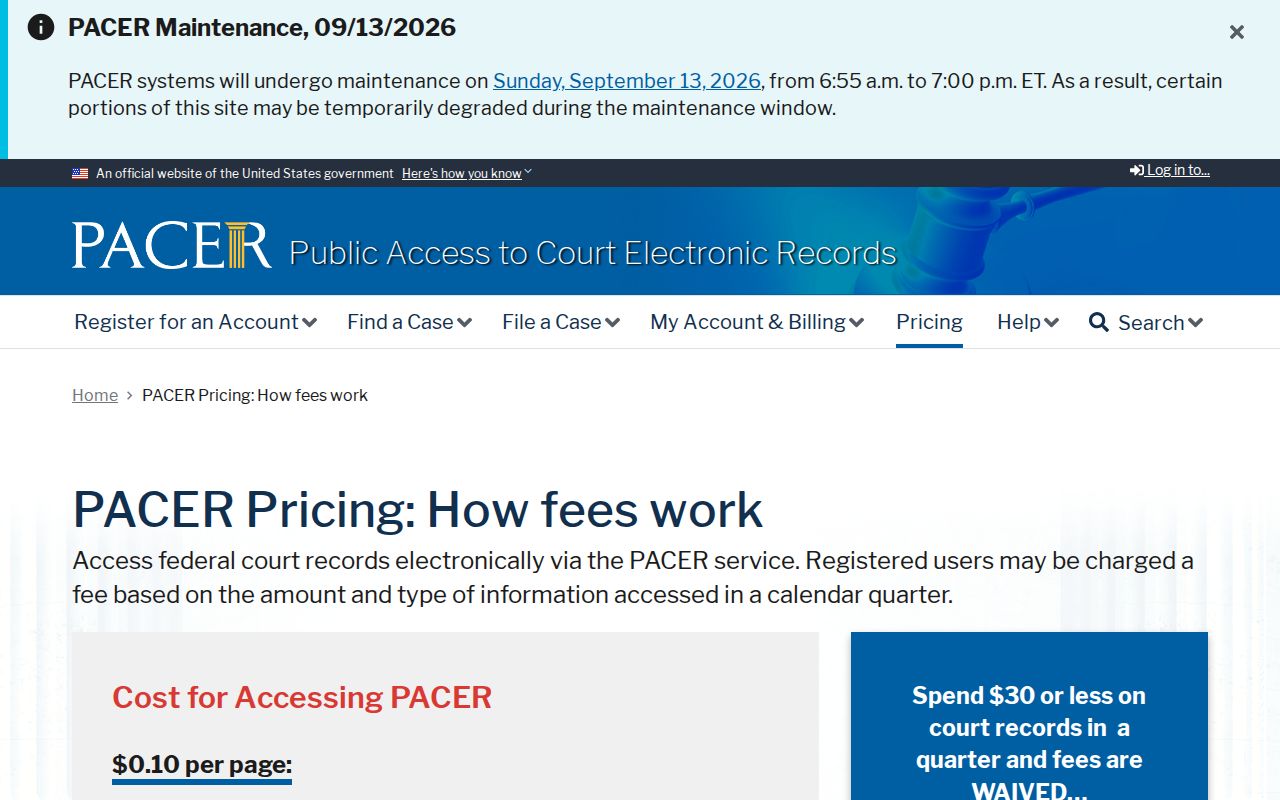
PACER can surface public docket material, but it will not expose a sealed warrant. Anyone worried about a federal matter in Fayette County should lean on a lawyer and go through the federal court directly.